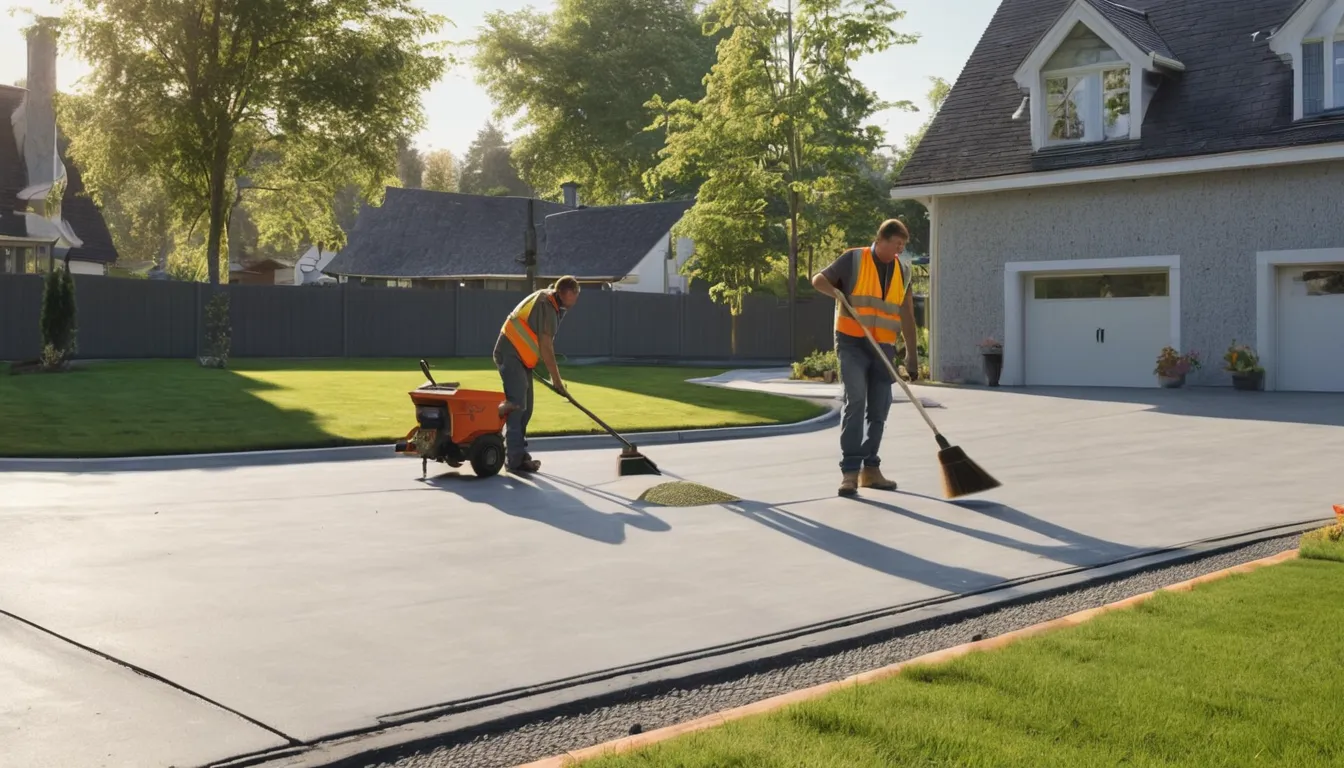
A driveway takes more punishment than almost any other part of your property. Cars, snow plows, road salt and repeated freezing all work on the slab year after year. Eventually the cracks, sunken spots and flaking surface tell you the slab has done its job. This page explains how to read those signs and what a replacement involves.
Olympinvesting Concrete is a referral service. It does not pour or finish concrete. Instead, it connects homeowners in the Lower Burrell area with independent local providers who handle new driveways. You will learn what happens hour by hour and day by day as concrete sets, so you can ask better questions before any work starts.
Is it time for a new concrete driveway?
Think of a driveway like a favorite pair of boots. You can patch the sole a few times, but one day the patches cost more than new boots. Concrete behaves the same way. This page helps you spot that moment, then explains what happens once new concrete goes in.
Signs your driveway is past patching
Look for these clues, starting with the most urgent:
- Slabs that have shifted, so one edge sits higher and could trip someone or catch a tire.
- Cracks wider than a pencil, or cracks that spread across the whole surface.
- Sunken spots that hold water after rain.
- Flaking or scaling, where the top layer peels off in thin sheets.
- Crumbling edges near the garage or the street.
Why cold winters speed this up
Water slips into a small crack and freezes. Ice takes up more room than water, so it pushes the crack wider, much like a bottle left in the freezer. Each thaw lets more water in. Snowmelt, coastal storms and road salt repeat the cycle every year.
Concrete driveway repair or full replacement?
Patching can suit a few narrow cracks in an otherwise sound slab. When the damage is spread out, concrete driveway repair often turns into a short-term fix. A local provider can look at the slab and explain both paths. Ask for each option in writing so you can compare them side by side.
Check the ground near the house
If your drive slopes toward the house, water may be sneaking toward a stone or block foundation. Cracks inside a basement wall point the same way. That is a question for foundation repair experts, and it is worth sorting out before new concrete is poured. A well-planned driveway slopes away from the home.
What a new driveway project includes
Driveways belong to concrete flatwork, the trade name for flat slabs such as drives, walks and pads. A typical project moves in order: removing the old slab, shaping the ground, building a stone base, setting forms, adding reinforcement, pouring, finishing and curing. Each step sets up the next one.
Day one: tear-out and base
The old slab is broken up and hauled away. The soil is then leveled and packed, and a layer of crushed stone goes down. Think of it as the bottom layer of a cake. If it is uneven, everything above it tilts.
The pour, hour by hour
Once the truck arrives, the clock starts. Mixed concrete stays workable for a limited time, so crews place it quickly. In the first few hours, water rises to the surface, and the finisher smooths and textures the slab. Later that day or the next morning, control joints are cut so any cracking follows neat, planned lines.
Days two through twenty-eight: curing
Concrete does not dry like paint. It cures through a chemical reaction that needs moisture. Walking on it is often fine after a day or two. Cars usually wait about a week. Full strength arrives near four weeks. Rushing this stage is where many problems begin.
Choosing size, thickness and finish
Most single-car drives are about ten feet wide, while two-car drives run closer to eighteen to twenty-four feet. Four inches of thickness suits passenger cars. Heavier trucks or RVs often call for five or six inches. A broom finish adds grip in wet weather. Exposed aggregate and color are other choices. Know your options before the quote is written.
Permits and the street apron
The apron is the part of the driveway that meets the street, and it usually sits on public land. Many towns want a permit and set their own rules for apron width, slope and thickness. Providers in our network often know the local process, but ask who pulls the permit and who pays for it.
Timing shapes concrete across the seasons
Fresh concrete is picky about temperature. Cold ground slows curing, and freezing too early can weaken the surface. Hot sun can dry the top before the middle is ready. In snowy regions, spring through fall is the usual window. Near the edges of the season, providers may use blankets or other protection.
Choosing a concrete contractor
Start with a few written quotes. Compare the same things in each: thickness, base depth, reinforcement, joint plan, finish, cleanup and curing plan. Ask what license or insurance your area requires, and ask to see proof. Ask before you pour, not after.
Questions to settle before work starts
- Where will the water go when it rains or the snow melts?
- How long until I can walk on it, and when can I park on it?
- What happens to my lawn, walkway and mailbox during the work?
- Who handles the haul-away of the old concrete?
After the pour: first winter care
Keep vehicles and heavy items off until your provider says it is safe. Skip de-icing salt the first winter and use sand for grip. Sweep often, and choose a plastic shovel over a metal one. Sealing after the concrete has fully cured helps it shed water.
Your next step
Request a callback to check provider availability, or send a request through the form. A local provider can walk the site, take measurements and explain your options with no obligation.
What's Included
Old Slab Removal
Breaking up and hauling away the worn driveway so the new one starts on a clean site.
Grading and Base
Leveling the soil and adding packed stone so the slab sits firm and drains well.
Forms and Reinforcement
Setting the edges and adding steel or mesh to help hold the slab together.
Pour, Finish and Cure
Placing, smoothing and protecting the concrete while it gains strength.
Typical Driveway Costs Across the U.S.
Prices vary with size, soil, access and finish. These typical U.S. ranges are a starting point, so always get a written quote for your own driveway.
| Item | Typical range | Notes |
|---|---|---|
| Plain broom-finish concrete | $6 – $12 per sq ft | Most common choice for standard drives |
| Two-car driveway, complete | $4,000 – $9,000 | Based on roughly 600 square feet |
| Old slab removal and haul-away | $1 – $3 per sq ft | Thicker or reinforced slabs cost more |
| Grading and stone base | $1 – $3 per sq ft | Poor soil or slopes raise the price |
| Decorative finish upgrade | $2 – $8 per sq ft | Color, exposed aggregate or stamped patterns |
| Permits and sealing | $100 – $800 | Permit rules and sealer choice differ by area |
How It Works
Tell Us About It
Share your address, driveway size and what you hope to change, using the form or phone.
Get Matched With Providers
Olympinvesting Concrete connects you with independent local providers who handle new driveways in your area.
Compare Written Quotes
Review scope, thickness, base, finish and timeline side by side before choosing anyone.
Schedule and Prepare
Agree on a start date, clear the area, and plan where cars will park during curing.
Why Call Olympinvesting Concrete
Know Your Options
Learn the choices in thickness, finish and timing first, so quotes make sense when they arrive.
Independent Providers
Work is done by local providers in our network, not by Olympinvesting Concrete itself.
Timing Explained
You will understand what happens hour by hour and day by day as the slab sets.
No Pressure
Request an estimate with no obligation and compare it at your own pace.
Other Services
Need concrete driveways in Lower Burrell?
Planning a new driveway, stamped finish, or patio? Request a callback to check provider availability, or send a request and a local provider will follow up.
No obligationConcrete Driveways FAQ
How long does a new concrete driveway last?
A well-built concrete driveway often lasts several decades. Climate, base preparation, thickness, drainage and winter salt use all matter. Freeze-thaw regions can shorten that span if water is not directed away from the slab.
How long before I can drive on a new concrete driveway?
Light foot traffic is often fine after a day or two. Most providers ask you to wait about a week before parking cars. Full strength takes around four weeks, so ask your provider for specific timing.
Is it better to replace or repair a cracked concrete driveway?
A few narrow cracks in a solid slab can often be patched. If the slab is sunken, shifted or cracked throughout, replacement usually lasts longer. Ask a local provider to explain both options in a written quote.
Request a callback
Planning a new driveway, stamped finish, or patio? Request a callback to check provider availability, or send a request and a local provider will follow up.
No obligation