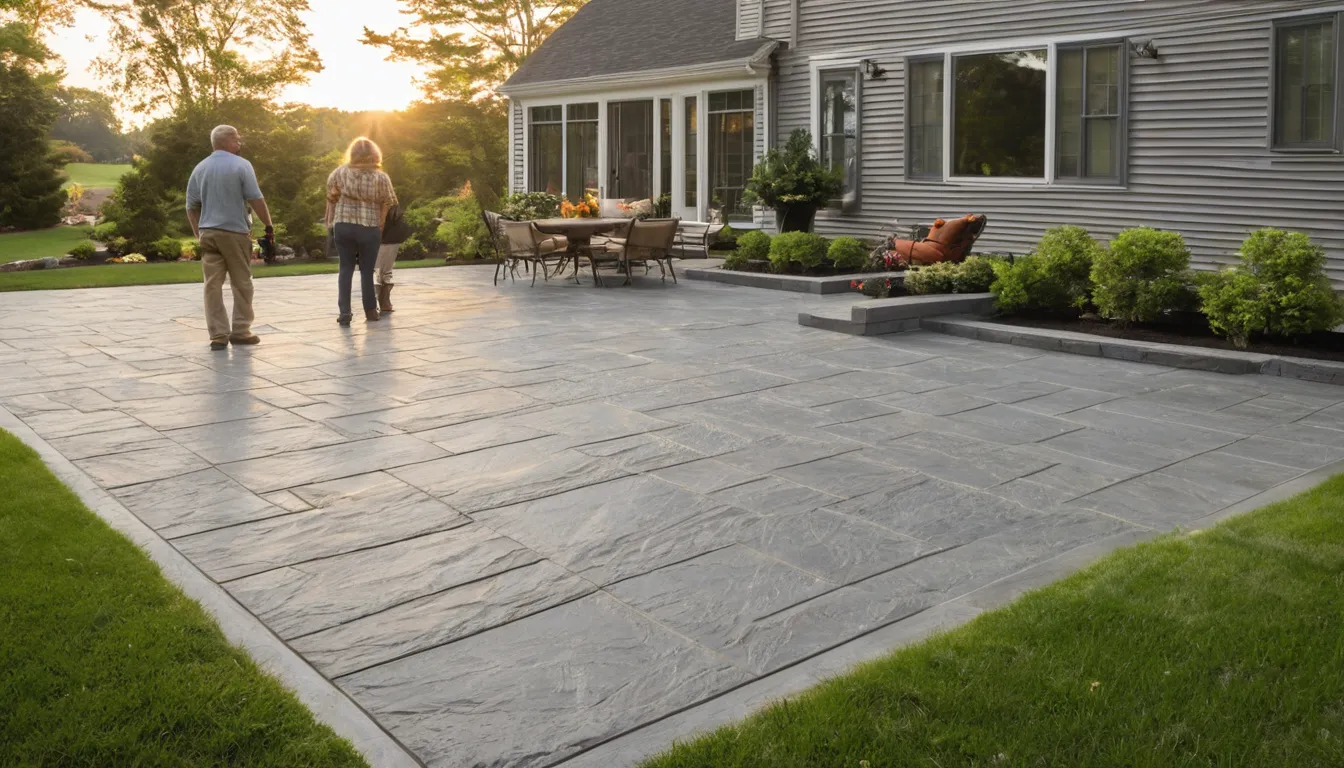
Stamped concrete starts as an ordinary slab. While it is still soft, a provider presses patterned mats into the surface so it picks up the texture of slate, brick, or wood. Color is added in the mix or brushed on top. Think of pressing a cookie cutter into dough: the window to leave a clean mark is short, and it closes as the dough firms up.
That short window is why this page walks through the process hour by hour and day by day. Knowing what happens, and when, helps you ask better questions before work begins. Olympinvesting Concrete is a referral service. It connects homeowners in Lower Burrell and the Lower Burrell area with independent local providers who handle stamped concrete patios, so you can compare options without pressure.
Why Timing Shapes Concrete
Stamped concrete is a short race. Once the mix is placed and smoothed, it starts to stiffen. Think of pressing a thumb into bread dough: right after mixing it dents easily, and an hour later it springs back. The stamps need that in-between moment.
The First Two Hours: Placing and Coloring
The provider levels the slab and adds color, either in the mix or as a powder on top. A release agent goes on too, so the mats do not stick. Heat speeds this stage up and cold slows it down, so a careful provider plans around the forecast.
Hours Two to Six: Pressing the Pattern
Mats are set down and pressed in. Hand tools finish the edges and tight corners. Stamp too early and the pattern slumps. Stamp too late and the texture comes out shallow. That is why you want a provider who watches the surface, not only the clock.
Days One to Three: Cutting Joints
Concrete shrinks as it dries. Control joints give it a planned place to crack, much like the scored lines on a chocolate bar. Without them, the slab picks its own lines, and they are rarely tidy.
Days Three to Ten: Washing and Sealing
The release powder is rinsed off and the surface is left to dry fully. Sealer goes on last. Seal too soon and trapped moisture can turn it cloudy. Waiting a little protects the color.
Weeks One to Four: Gaining Strength
Light foot traffic is often fine after several days. Furniture and heavier loads usually wait longer. Concrete keeps hardening for about a month, so ask the provider for their own schedule.
How Long the Whole Job Takes
Active work on a patio often fits into a few days. Planning, forms, base work, and curing stretch the full timeline to a couple of weeks or more. Rain, heat, and frost can add days. It is like baking bread: you cannot hurry the rise.
How Cold Weather Changes the Plan
Cold snowy winters are hard on young concrete. Water soaks into tiny pores, turns to ice, and pushes outward, like a wet sponge that swells every time it ices over. Many providers in colder regions use an air-entrained mix and protect fresh slabs from frost. Skip rock salt in the first winter, since de-icers can flake a young surface. Coastal storms teach another lesson: water needs somewhere to go, so drainage matters as much as looks.
Older Homes Need Extra Thought
Stone and block foundations, full basements, and Cape Cod style homes often come with tight, uneven yards. A new patio should slope gently away from the house, so snowmelt does not pool against the wall, like a bowl tipped away from a table. If you notice cracks or leaning in a foundation, foundation repair experts are a separate trade. Sort that out before anything new goes on top.
Popular Patterns and Colors
Slate, ashlar stone, brick, cobblestone, and wood plank are common choices. Colors run from soft gray and sand to charcoal and warm brown. Many providers add a second, darker tone to give the surface depth, the way a painter shades a wall.
Where Stamped Concrete Works Well
Stamped concrete patios are the classic use. Walkways, pool surrounds, porches, and entry landings also take the look nicely. All of it is concrete flatwork, so the same rules about base, slope, and joints apply to each.
Stamped Concrete vs. Pavers
Pavers are like a floor of individual tiles. Stamped concrete is more like one large rug. Pavers can be lifted and reset one at a time, but weeds and shifting can creep into the gaps. A stamped slab has no gaps, though hairline cracks may show over the years. Neither choice is wrong. It depends on your yard, soil, and budget.
Caring for Stamped Concrete
- Sweep and rinse often, and use a mild cleaner on stains.
- Reseal about every two to three years, or when water stops beading.
- Use a plastic shovel in winter.
- Wipe up oil and grease quickly.
Questions to Ask Before You Pour
Ask before you pour. A short list helps you compare providers fairly:
- Can I see photos of finished stamped work?
- How will you handle joints, slope, and drainage?
- What sealer do you use, and when does it go on?
- What is the plan if the weather turns?
- Can I get the scope and price in writing?
Choosing a Stamped Concrete Provider
Olympinvesting Concrete is a referral service. It connects homeowners with independent local providers and does not do the work itself. Providers set their own schedules, prices, and terms, so compare more than one when you can. Request a callback to check provider availability for your project.
Prefer to Start in Writing?
If you would rather lay out your ideas first, describe your space and request an estimate. There is no obligation.
What's Included
Pattern Choices
Slate, brick, cobblestone, and wood plank textures, matched to your home's style.
Color and Finish Options
Integral color, surface tints, and a sealer sheen from soft matte to glossy.
Base and Slope Work
Proper gravel base and gentle grading so water drains away from your house.
Joints and Sealing
Planned control joints plus a sealer that protects color from weather and stains.
Typical Stamped Concrete Costs
Stamped concrete usually costs more than plain concrete because of the color, tools, and extra steps. These are typical U.S. ranges only. Prices vary by job, so get a written quote.
| Item | Typical range | Notes |
|---|---|---|
| Basic stamped patio, per sq ft | $12 – $20 | Single color, simple pattern |
| Detailed or two-tone work, per sq ft | $15 – $25 | More coloring and hand work |
| Average patio, about 300 sq ft | $4,000 – $9,000 | Size, access, and site vary |
| Site prep and base work | $1,000 – $3,000 | Grading, gravel, forms, old slab removal |
| Sealing, per sq ft | $1 – $3 | Repeat every few years |
| Borders, steps, and accents | $500 – $3,000 | Depends on length and detail |
How It Works
Share Your Project
Tell Olympinvesting Concrete about your space, the look you want, and any concerns about drainage or older foundations.
Get Connected
Olympinvesting Concrete connects you with independent local providers who handle stamped concrete patios in your area.
Compare Written Quotes
Review scope, pattern, color, sealer, and schedule from each provider before you choose one.
Plan the Pour
Agree on timing and weather plans, then let the provider handle the work.
Why Call Olympinvesting Concrete
Understand the Timeline First
Knowing each stage helps you spot rushed work before it becomes a lasting problem.
Compare Options
See how stamped slabs and pavers differ before you decide on either.
Local Providers
Independent providers know regional frost, soil, and drainage conditions in your area.
No Pressure
Ask questions and request an estimate with no obligation to hire anyone.
Other Services
Need stamped concrete services in Lower Burrell?
Planning a new driveway, stamped finish, or patio? Request a callback to check provider availability, or send a request and a local provider will follow up.
No obligationStamped Concrete Services FAQ
How long does stamped concrete take to cure?
Light foot traffic is often fine after several days, and heavier loads usually wait longer. Concrete keeps gaining strength for about a month, so ask your provider for their own schedule.
Does stamped concrete crack, and can the cracks be prevented?
All concrete can crack as it dries and shifts. Providers cut control joints so cracks follow planned lines instead of random paths. Good base work and drainage also reduce the chance of larger cracks in cold climates.
Is stamped concrete better than pavers for a patio?
Neither is better for everyone. Stamped concrete is one seamless slab, while pavers can be reset individually. Your soil, budget, and look matter most, so compare written quotes for both.
Request a callback
Planning a new driveway, stamped finish, or patio? Request a callback to check provider availability, or send a request and a local provider will follow up.
No obligation